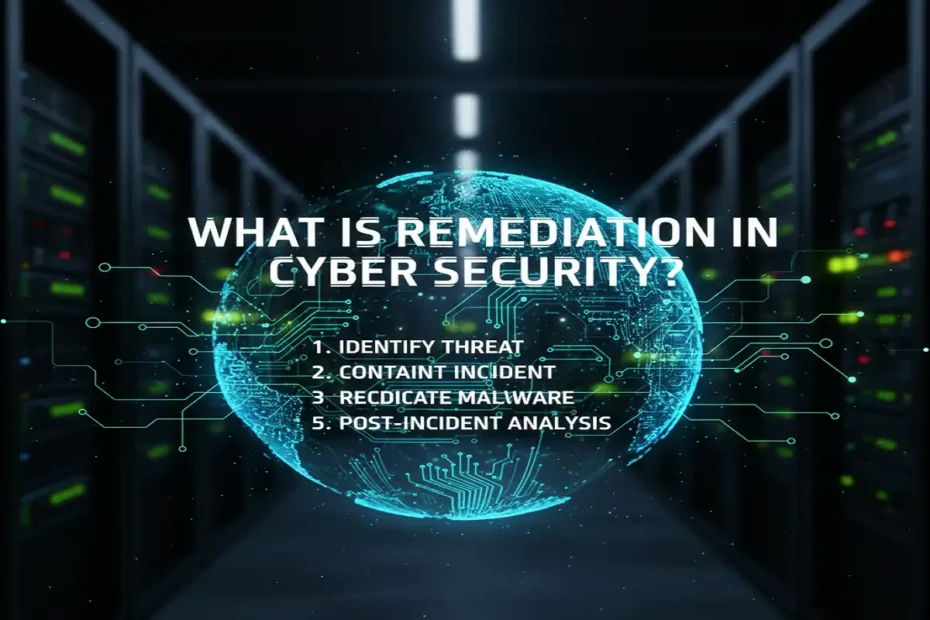
In today’s digital world, businesses and individuals are constantly exposed to cyber threats. Cybersecurity is no longer optional; it is essential to protect sensitive information and maintain trust. One critical concept in this field that organizations must understand is What Is Remediation in Cyber Security. Understanding this process is crucial for minimizing damage, preventing future attacks, and ensuring compliance with industry standards.
Understanding Cybersecurity Remediation
Remediation in cyber security refers to the actions taken to resolve vulnerabilities, security breaches, or other threats that could compromise a system. It is not merely about identifying problems; remediation involves taking concrete steps to fix, mitigate, or prevent risks from impacting the organization. This process is a key component of a proactive cybersecurity strategy and is essential for maintaining operational integrity.
The term encompasses a range of activities, including patching software vulnerabilities, updating security protocols, enhancing user access controls, and eliminating malware. Organizations that implement effective remediation strategies can reduce downtime, prevent financial loss, and protect sensitive data from unauthorized access.
The Importance of Cybersecurity Remediation
Cyber threats are evolving constantly. Hackers employ sophisticated techniques to exploit system weaknesses, making timely remediation crucial. Here are some reasons why understanding What Is Remediation in Cyber Security is vital:
-
Minimizing Damage: Once a vulnerability or breach is detected, immediate remediation limits the potential impact. Delaying corrective measures can result in data theft, financial loss, or reputational damage.
-
Regulatory Compliance: Many industries are governed by strict regulations, such as HIPAA for healthcare or GDPR for data privacy. Effective remediation ensures compliance and avoids legal penalties.
-
Maintaining Trust: Customers and stakeholders expect organizations to protect their information. Prompt remediation demonstrates a commitment to cybersecurity, reinforcing trust.
-
Preventing Future Threats: Remediation is not just reactive; it often involves analyzing the root cause and implementing measures to prevent similar incidents in the future.
Steps Involved in Cybersecurity Remediation
Understanding What Is Remediation in Cyber Security also requires a grasp of the typical steps involved in the process. These steps ensure a structured and effective response to threats:
-
Detection and Identification: The first step is identifying the security issue. This may involve intrusion detection systems, vulnerability scanning, or monitoring unusual network activity.
-
Assessment of Impact: Once detected, the severity of the threat is assessed. Not all vulnerabilities pose the same level of risk, so prioritization is essential.
-
Planning the Remediation: A remediation plan is formulated based on the assessment. This plan includes the steps needed to eliminate the threat, fix vulnerabilities, and restore normal operations.
-
Implementation: The actual remediation involves applying patches, updating configurations, removing malicious software, or strengthening security policies.
-
Validation and Testing: After remediation, it’s critical to test systems to ensure that the threat has been fully resolved and that no new vulnerabilities were introduced.
-
Documentation and Reporting: Proper documentation of remediation activities helps in audits, regulatory compliance, and future incident response planning.
Tools and Techniques for Effective Remediation
Modern cybersecurity professionals rely on a combination of tools and techniques to carry out remediation effectively:
-
Patch Management Tools: Automate the updating of software to fix known vulnerabilities.
-
Endpoint Detection and Response (EDR): Monitors devices for suspicious activity and facilitates remediation.
-
Security Information and Event Management (SIEM): Aggregates logs and provides real-time analysis to detect and remediate threats.
-
Incident Response Plans: Clearly defined plans ensure that remediation is fast, efficient, and well-coordinated.
Best Practices for Cybersecurity Remediation
To maximize the effectiveness of remediation, organizations should follow several best practices:
-
Prioritize High-Risk Threats: Focus on vulnerabilities that pose the greatest risk to critical systems.
-
Continuous Monitoring: Remediation is an ongoing process; continuous monitoring ensures that new threats are detected promptly.
-
Employee Training: Human error is often the weakest link. Educating employees on safe practices reduces the likelihood of breaches.
-
Regular Security Audits: Periodic assessments help identify vulnerabilities before they are exploited.
Conclusion
Understanding What Is Remediation in Cyber Security is essential for any organization aiming to safeguard its digital assets. Remediation goes beyond identifying threats—it involves a proactive, structured approach to fix vulnerabilities, minimize damage, and prevent future incidents. By integrating detection, assessment, planning, implementation, and testing, businesses can maintain robust security postures and protect sensitive information effectively.
In a world where cyber threats are continuously evolving, ignoring remediation is not an option. Organizations that prioritize remediation not only secure their systems but also build trust, ensure compliance, and maintain long-term resilience. Understanding and implementing cybersecurity remediation is, therefore, a cornerstone of modern digital defense strategies.
FAQs
1. What Is Remediation in Cyber Security?
Remediation in cyber security is the process of identifying and fixing security vulnerabilities to protect systems and data from cyber threats.
2. Why Is Cyber Security Remediation Important?
It helps minimize damage from attacks, ensures regulatory compliance, protects sensitive information, and prevents future security incidents.
3. What Are the Key Steps in Cyber Security Remediation?
The main steps include detecting threats, assessing their impact, planning remediation, implementing fixes, testing, and documenting the process.
4. Which Tools Are Used for Effective Remediation?
Tools like patch management software, EDR (Endpoint Detection and Response), and SIEM (Security Information and Event Management) are essential for efficient remediation.
5. How Can Organizations Strengthen Their Remediation Process?
Organizations can improve remediation by prioritizing high-risk vulnerabilities, continuous monitoring, employee training, and regular security audits.