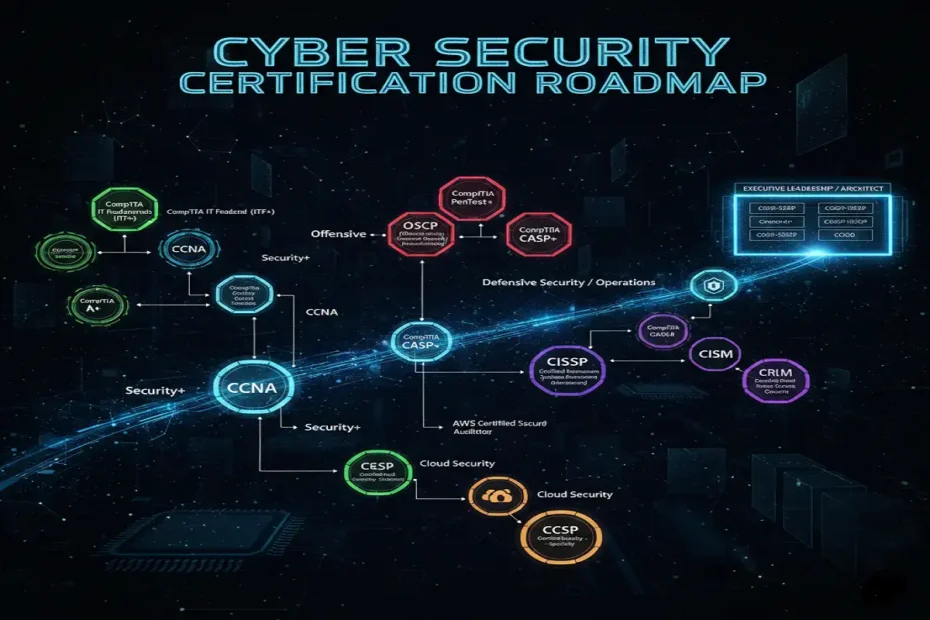
Building a successful career in cybersecurity requires a clear plan, practical skills, and recognized certifications. That is why many beginners and IT professionals look for a cyber security cert roadmap that guides them from the foundational level to advanced expertise. With global cyber threats rising every year, organizations now depend heavily on certified professionals who can protect data, respond to incidents, and secure digital infrastructures. This article provides a detailed and accurate guide to help you follow the best certification path and grow confidently in the cybersecurity field.
Why a Roadmap Matters in Cybersecurity
Cybersecurity is not a single field—it includes network defense, ethical hacking, cloud security, SOC operations, digital forensics, and governance. Without a structured path, learners often feel overwhelmed and confused about where to begin. A cyber security cert roadmap helps you understand which certifications matter most at each stage of your career and how they connect to real-world job roles. It eliminates guesswork and helps you progress faster while building skills that employers trust.
Step 1: Start with Foundational Cybersecurity Certifications
Before exploring advanced paths, every learner should begin with strong fundamentals. Entry-level certifications build your understanding of networking, security concepts, operating systems, and basic threat detection.
The best foundational certifications include:
-
CompTIA ITF+ – Ideal for complete beginners with little or no IT experience.
-
CompTIA A+ – Provides hardware, software, and troubleshooting basics.
-
CompTIA Network+ – Builds strong knowledge of networking protocols, routers, switches, and configurations.
-
CompTIA Security+ – Recognized globally as the first major step into cybersecurity roles.
These certifications serve as the starting point in any cyber security cert roadmap, giving you the knowledge required to move into more specialized areas like ethical hacking or SOC analysis.
Step 2: Intermediate Certifications for Skill Growth
Once you have the fundamentals, the next stage focuses on strengthening your technical skills and preparing you for real-world security tasks.
Important intermediate certifications include:
-
EC-Council CEH (Certified Ethical Hacker) – Teaches penetration testing and vulnerability identification.
-
CompTIA CySA+ (Cybersecurity Analyst) – Focuses on threat detection, incident response, and SIEM tools.
-
Cisco CCNA Security – Great for building network security expertise.
These mid-level certifications help learners transition from theory to hands-on cyber defense. Every strong cyber security cert roadmap must include certifications that build analytical and technical experience, because cybersecurity is a highly practical field.
Step 3: Advanced Cybersecurity Certifications for Specialized Roles
After gaining solid experience and mid-level certifications, professionals can move into advanced and high-paying job roles. Specializations such as cloud security, penetration testing, and governance are often built at this stage.
Top advanced certifications include:
-
CompTIA CASP+ – One of the most respected performance-based advanced certifications.
-
(ISC)² CISSP – A gold-standard certification for senior cybersecurity leadership roles.
-
EC-Council LPT Master – Advanced penetration testing certification.
-
GIAC Certifications (SANS Institute) – Highly respected for hands-on cyber defense and forensics.
Following an advanced stage within your cyber security cert roadmap lets you target roles such as security architect, senior penetration tester, or cybersecurity manager.
Step 4: Cloud Security Certifications for Modern Cyber Jobs
As companies move their systems to the cloud, cloud security skills have become essential. Adding cloud security to your cyber security cert roadmap increases your value in the job market and aligns your skills with modern business needs.
Popular cloud security certifications include:
-
AWS Certified Security – Specialty
-
Microsoft Azure Security Engineer Associate
-
Google Professional Cloud Security Engineer
These certifications prepare you for careers in cloud defense, cloud compliance, and infrastructure protection.
Step 5: SOC Operations & Incident Response Certifications
Security Operations Center (SOC) roles are in huge demand worldwide. Certifications in this category are perfect for learners who enjoy threat monitoring, log analysis, and incident response.
Recommended SOC certifications include:
-
Blue Team Level 1 (BTL1)
-
CompTIA CySA+
-
EC-Council CSA
-
Splunk Core User/Power User
Adding these certifications to your cyber security cert roadmap ensures you gain the defensive skills organizations urgently need.
Conclusion: Build Your Career with a Strategic Certification Path
A structured cyber security cert roadmap helps you move from beginner to expert with confidence. By starting with foundational certifications, building intermediate skills, and choosing advanced specializations, you can create a future-proof cybersecurity career. Whether your goal is ethical hacking, SOC analysis, cloud security, or cyber leadership, following a well-planned certification path ensures you stay competitive, knowledgeable, and industry-ready.
FAQs
-
What is the best starting point in a cyber security cert roadmap?
The best starting point is foundational certifications like CompTIA Security+, Network+, or ITF+ to build essential skills. -
How can a cyber security cert roadmap boost my career?
It gives clear direction, helps you gain trusted skills, and increases your chances of landing high-paying cybersecurity roles. -
Which intermediate certifications should I take next?
Certifications like CEH, CompTIA CySA+, or Cisco CCNA Security help you gain hands-on cybersecurity experience. -
Are advanced certifications necessary in a cyber security cert roadmap?
Yes, certifications like CISSP, CASP+, or GIAC are crucial for senior, specialized, and leadership roles. -
Do cloud security certifications fit in a cyber security cert roadmap?
Absolutely. AWS, Azure, or Google Cloud Security certifications enhance your skills and job opportunities in modern IT environments.